
Rupantar Conducted 3rd Students’ Research Seminar Through Virtual Platform
Rupantar organized its 3rd Students’ Research Seminar through a virtual Zoom meeting, bringing together students, professors, researchers, and colleagues from Nepal, India, and Bangladesh. The event served as an important platform for emerging researchers to present their academic work, exchange ideas, and receive valuable feedback from experts in the field.
A total of 22 participants attended the two-hour online session, including professors, researchers, students, and Rupantar team members. The seminar featured presentations by five student researchers, comprising four Bachelor of Science in Agriculture students and one PhD scholar, who shared findings from their respective studies on agriculture, farming systems, and rural development.
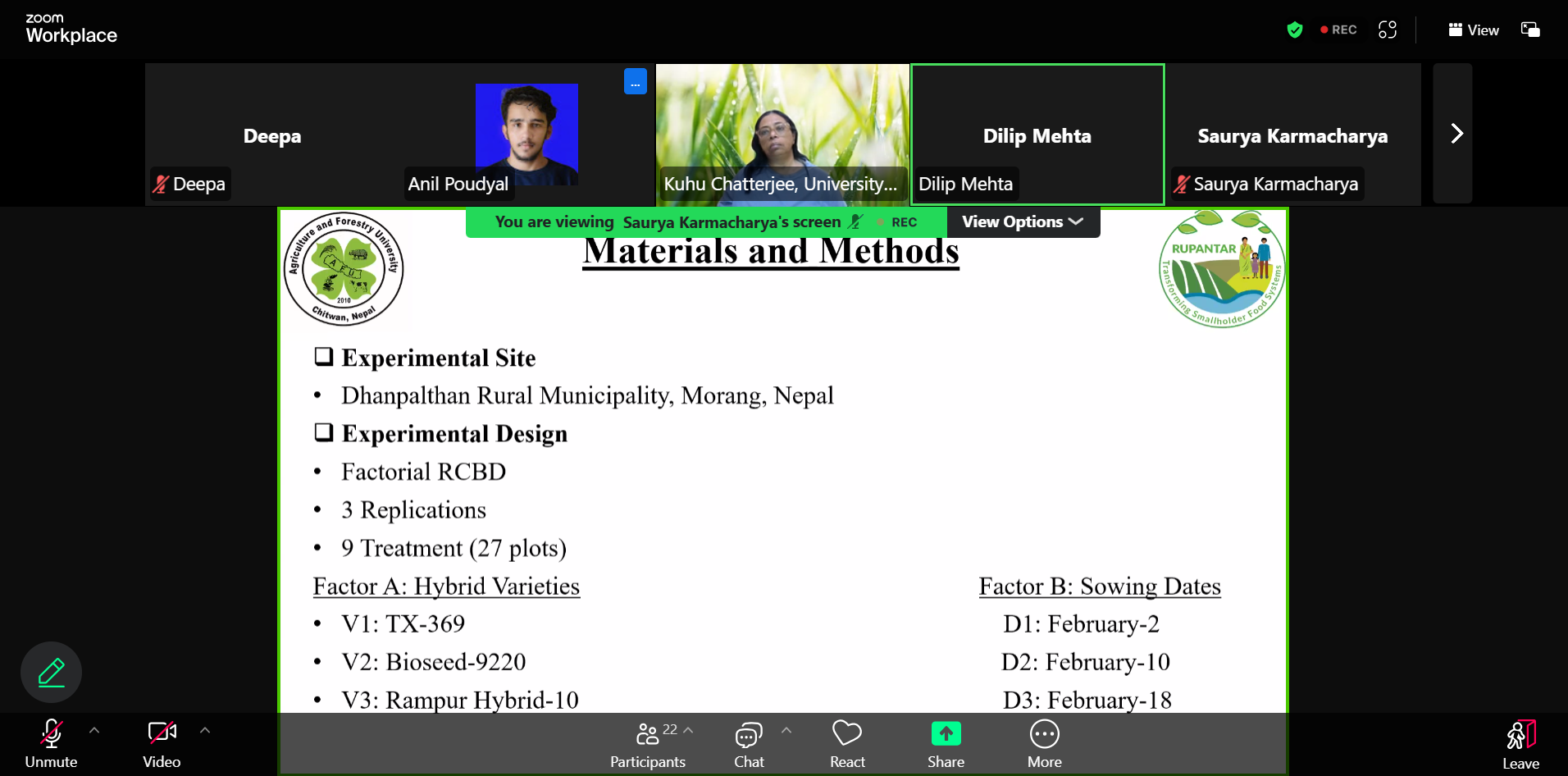
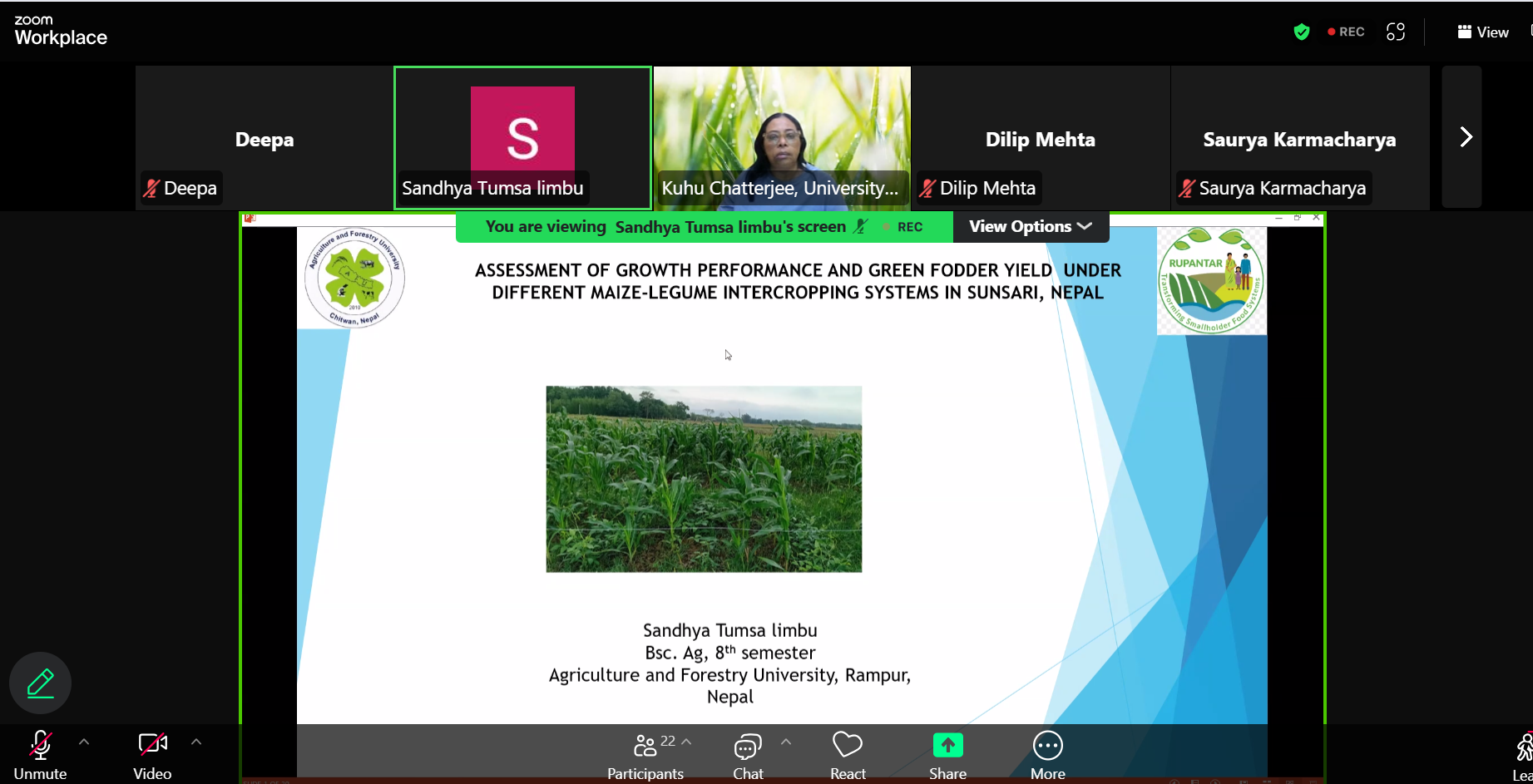
The seminar showcased a diverse range of research topics that addressed current challenges and opportunities in the agricultural sector. The presentations included:
Response of Different Maize Varieties to Different Dates of Sowing in the Eastern Gangetic Plains of Nepal,
Evaluation of the Combined Effect of Organic and Inorganic Fertilizers on the Growth and Yield of Radish (Raphanus sativus) Grown as an Intercrop in Young Arecanut (Areca catechu) Plantations in Bhadrapur Municipality, Jhapa,
Assessment of Growth Performance and Green Fodder Yield in Different Maize–Legume Intercropping Systems in Sunsari, Nepal,
Financial Analysis of Arecanut-Based Multilayer Farming in Jhapa District, Nepal,
Exploring Decadal Shifts in Cropping Patterns and Crop Diversification in North Bengal, India.
The studies highlighted innovative approaches to improving agricultural productivity, promoting sustainable farming practices, enhancing crop diversification, and understanding the economic viability of farming systems in South Asia. The presentations also demonstrated the growing research capacity of young scholars working on issues that directly affect farmers and rural communities.
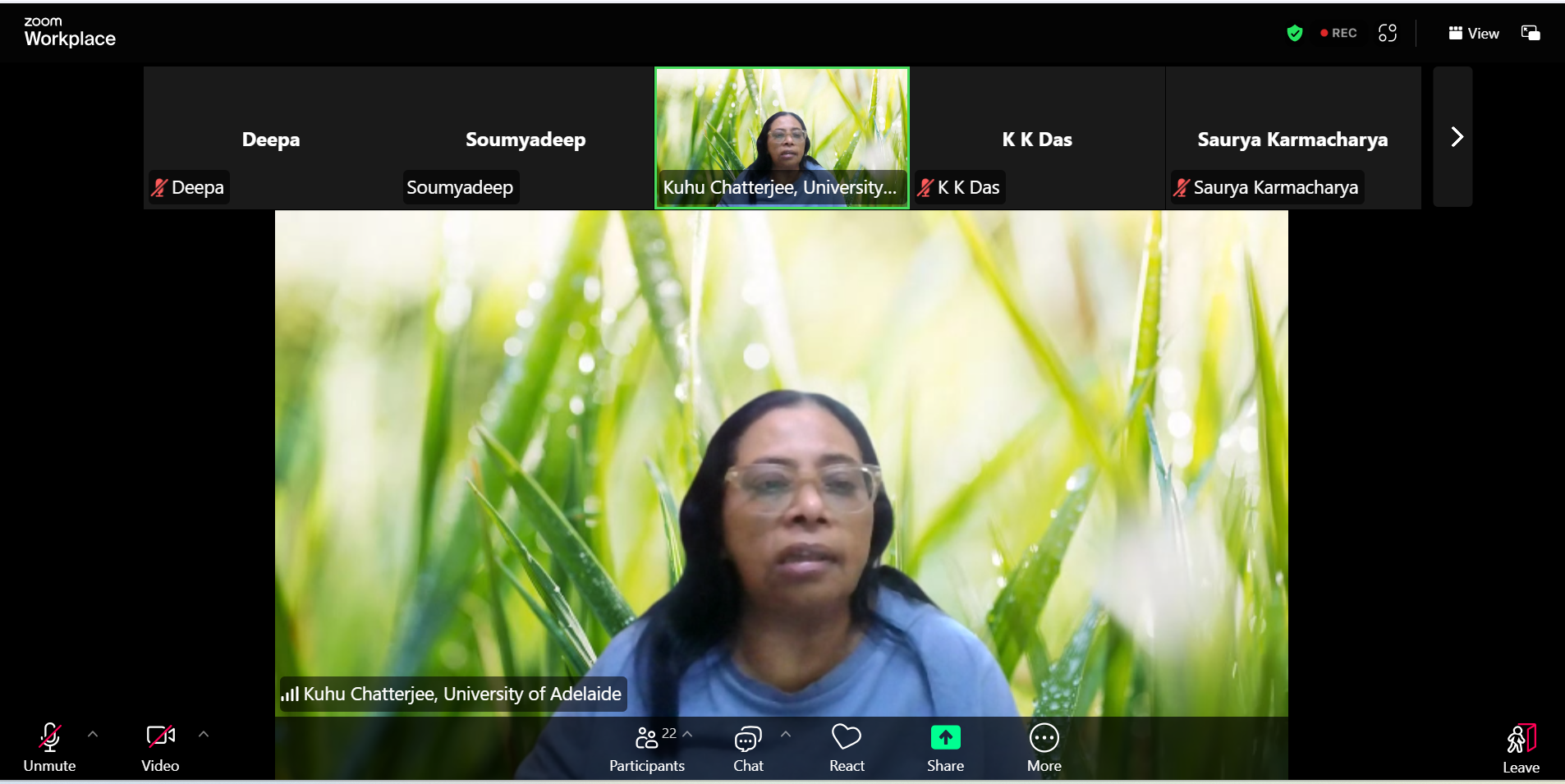
The session was facilitated by Dr. Kuhu Chatterjee from the Adelaide University under the Rupantar Project. Following the presentations, participants engaged in an interactive question-and-answer session, during which professors and researchers provided constructive feedback to the presenters. Discussions focused on strengthening research methodologies, refining research questions, improving data interpretation, and identifying ways to enhance the quality and impact of research papers. The exchange offered students valuable insights that will support the further development of their studies and future academic pursuits.
Through mentorship, technical guidance, and opportunities for knowledge sharing, Rupantar continues to create pathways for academic and professional development. Initiatives such as the Students’ Research Seminar provide young scholars with opportunities to strengthen their presentation skills, engage with experts, build professional networks, and contribute to evidence-based solutions for agricultural and rural development challenges in their respective countries and beyond. Alongside its scholarship and academic support initiatives, Rupantar remains committed to empowering the next generation of agricultural professionals and promoting research-driven solutions to the evolving challenges facing agriculture in the Eastern Gangetic Plains.
