
Exposure Visit for Women Farmers on Scientific Goat Rearing in Cooch Behar
On 18 June 2026, an exposure visit was organized for 30 women farmers engaged in scientific goat rearing under the non-plot diversification pathway to Uttaran Mahila Prani Sampada Producer Company Ltd., a successful women-led livestock producer company in Cooch Behar. The visit was jointly organized by Uttar Banga Krishi Viswavidyalaya (UBKV), Animal Resources Development Department, Government of West Bengal, and Bhumi Shakti Farmers Producer Company Ltd.
The exposure visit aimed to provide participating farmers with first-hand experience of a professionally managed Farmer Producer Company (FPC) that has successfully evolved from a Self-Help Group (SHG) into a thriving producer company with the support of the Rupantar Project, UBKV, and the Animal Resources Development Department.
Located approximately 60 kilometres from Bhumi Shakti Farmers Producer Company Ltd. within the Cooch Behar district, Uttaran Mahila Prani Sampada Producer Company Ltd. has emerged as a women-led collective entrepreneurship. Starting as a Self-Help Group, the producer company today comprises more than 500 active women members managing over 5,000 goats. With continuous technical guidance from UBKV and institutional support from the Animal Resources Development Department, the FPC has strengthened its production systems, improved market access, and expanded livestock support services for rural communities.
During the visit, participants interacted with members of the producer company and learned about scientific livestock management practices. These included balanced feeding techniques, the cultivation and use of protein-rich Azolla as livestock feed, and low-cost feed preparation methods such as feeding chopped straw soaked in jaggery water. They also gained practical knowledge on vaccination schedules, disease prevention, animal health management, breeding practices, and value chain development for goat farming.
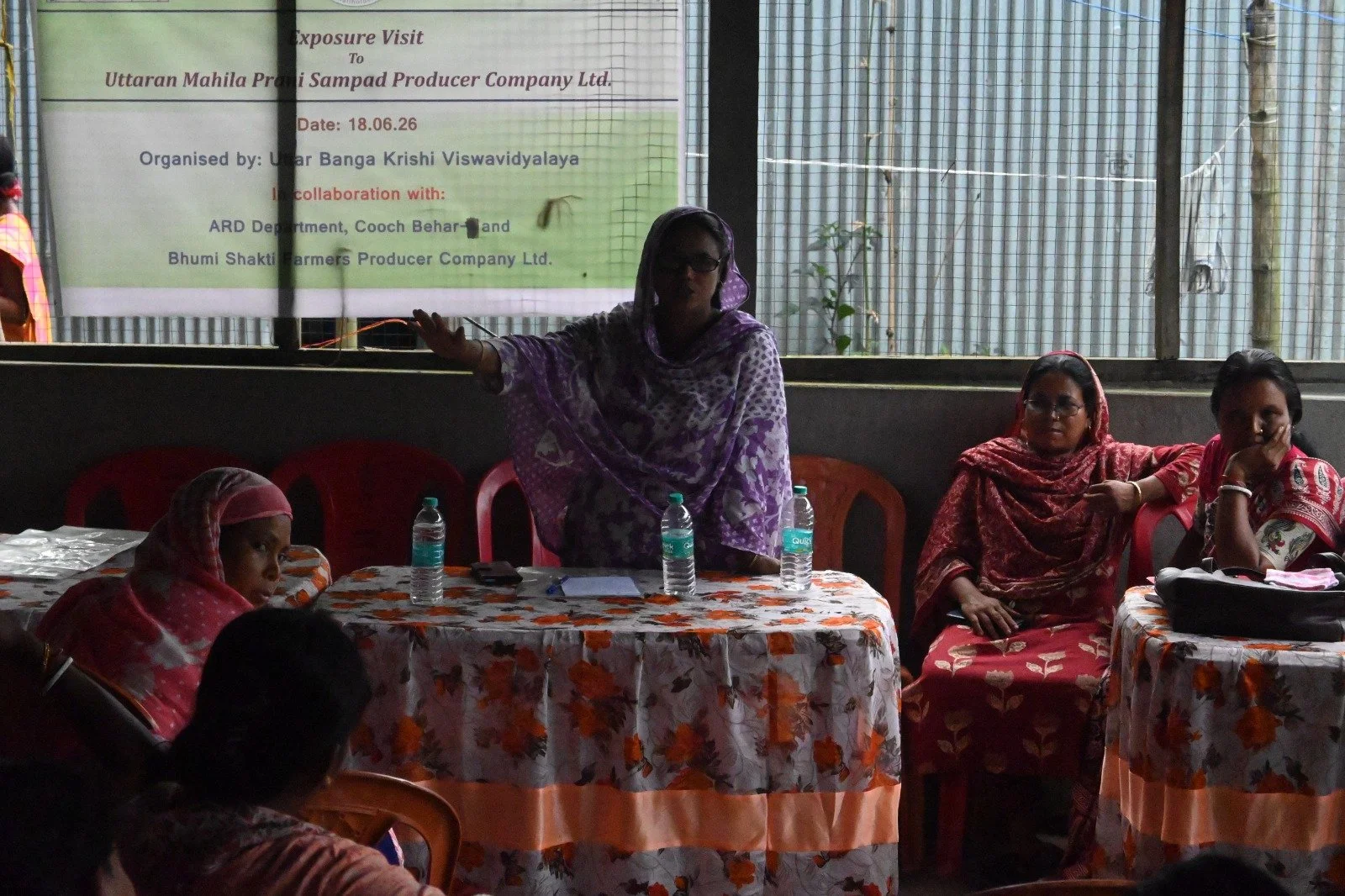
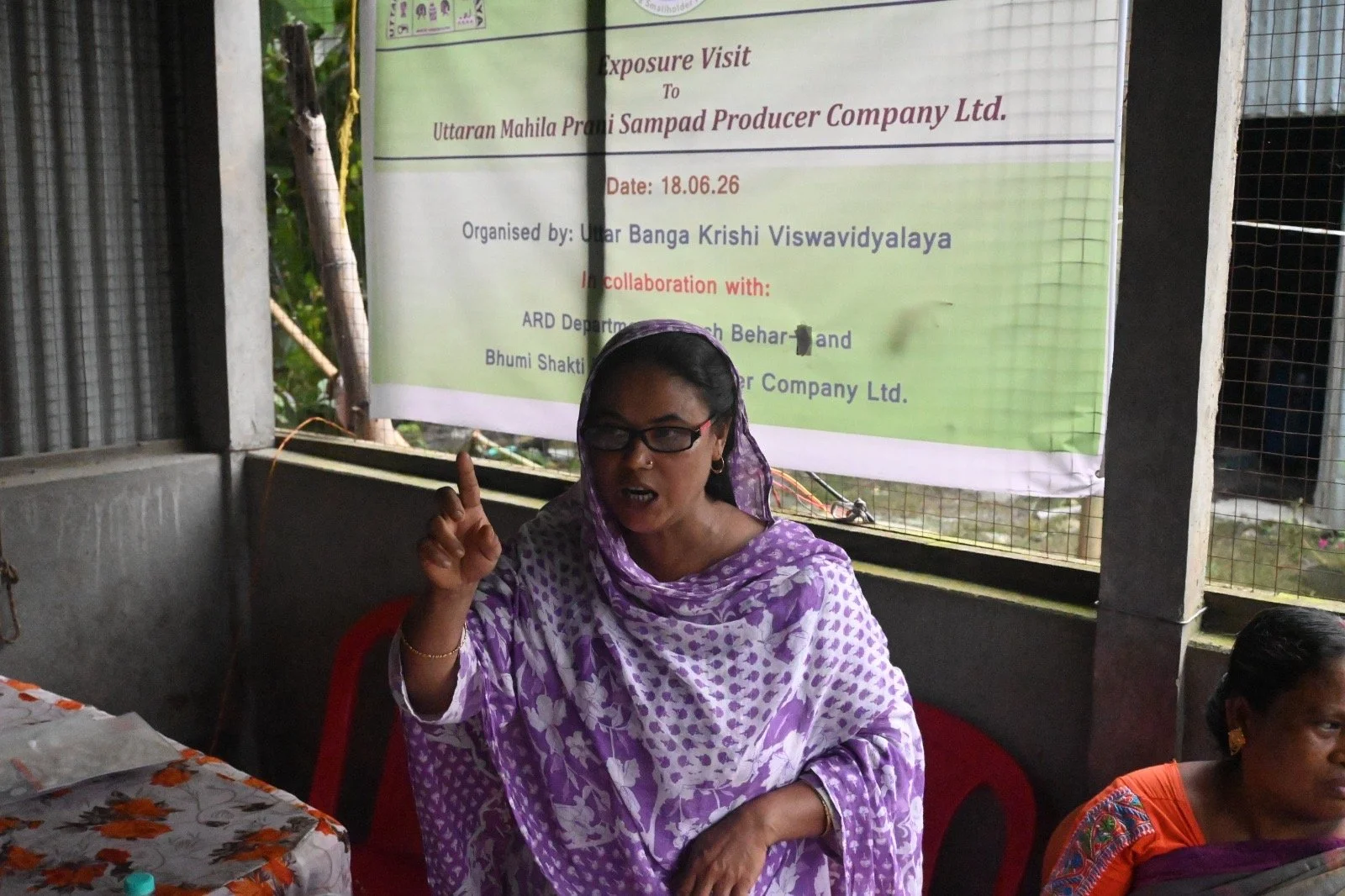
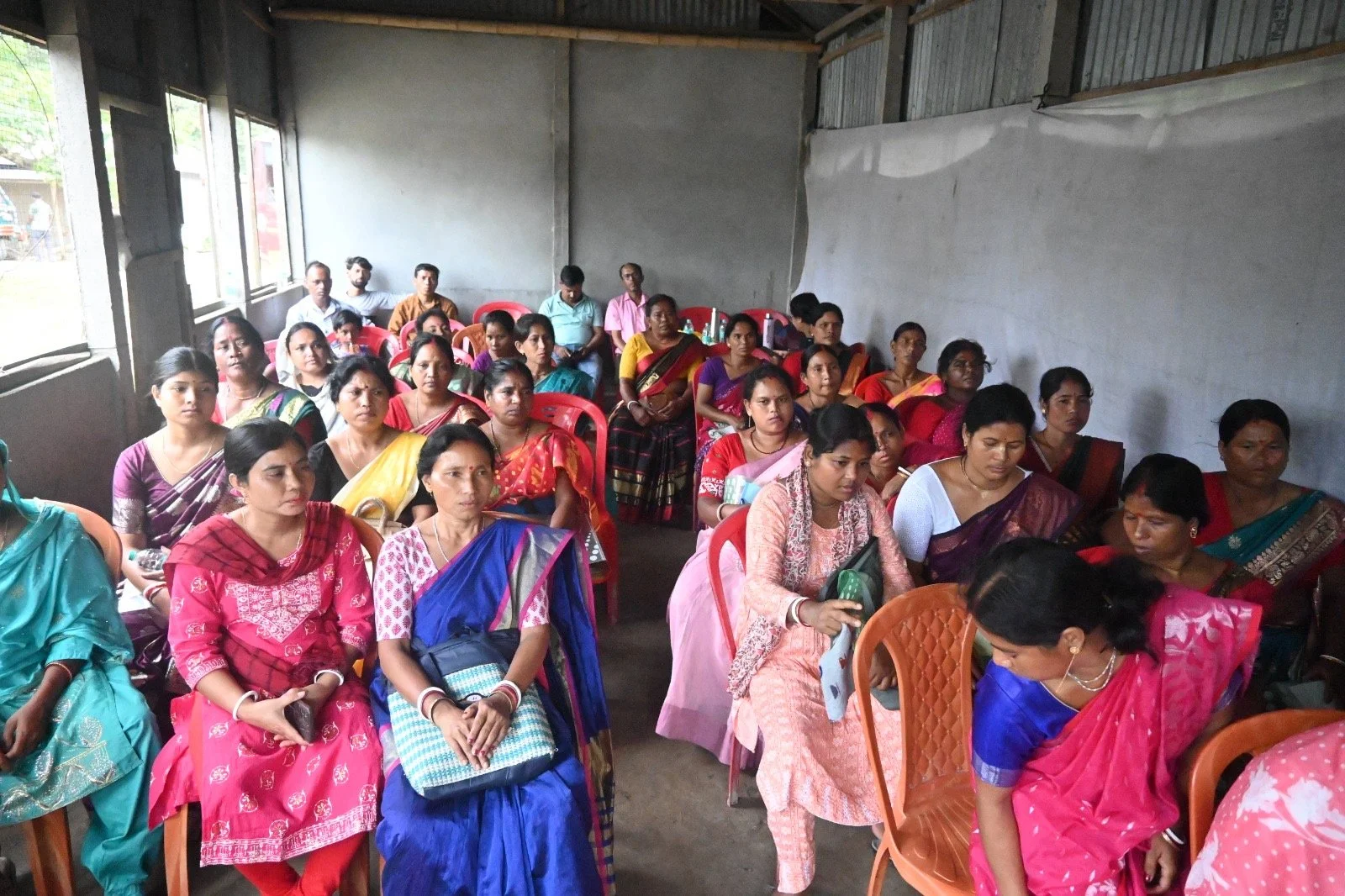
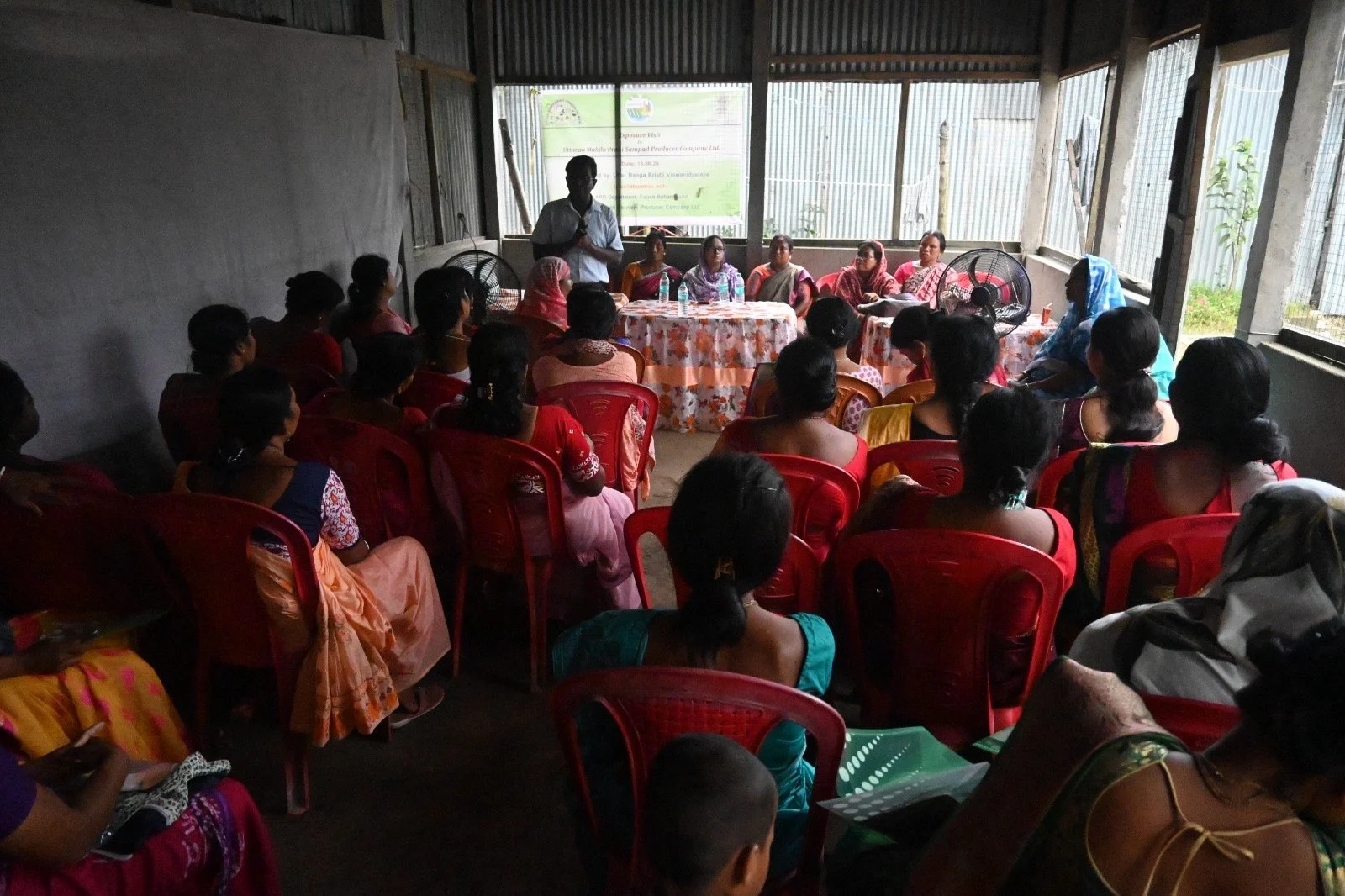
The farmers further learned how the producer company supplies goats for government programmes and major events across Cooch Behar and neighbouring districts, while also providing vaccination and livestock health services to local farmers. The interaction highlighted the role of collective action in strengthening market access, improving livestock management, and creating sustainable livelihood opportunities for rural women. The visit also provided an open platform for participants to discuss the opportunities and challenges related with expanding their livestock enterprises.
One participating farmer shared, "The training has increased my confidence in scientific goat rearing. However, as our herds grow, finding enough land for grazing has become a challenge. Fodder cultivation and feed management can also be expensive, so we need affordable solutions to expand our enterprises sustainably."
She further highlighted the financial barriers faced by many rural women, adding, "Many women have the skills and willingness to rear more goats, but limited financial resources make it difficult to invest in larger herds, better sheds, and quality feed. Continued technical guidance and improved access to finance will help us grow our enterprises."
Another participant appreciated the growing demand for goats but also pointed out the need for stronger market systems. "The market for quality goats is encouraging. However, if production increases significantly, we will need stronger market linkages to ensure fair prices and regular buyers for our livestock," she said.
To address these challenges, Rupantar’s implementing partner, Bhumi Shakti Farmers Producer Company Ltd., continues to work closely with UBKV’s Krishi Vigyan Kendra to provide continuous, long-term technical and business management training. They are supporting women farmers in Cooch Behar to transform traditional goat rearing into resilient, market-oriented enterprises that contribute to improved household incomes and sustainable rural development.