
From Chemical Exposure to Sustainable Farming: The Journey of a Brinjal Farmer in Northern Bangladesh
The brinjal farmers in Bangladesh usually apply large volumes of chemical pesticides to control pests and diseases. Therefore, the Rupantar project has created awareness among brinjal farming households about the harmful effects of excessive use of pesticide. As a result, farmers have become increasingly concerned about soil degradation, water pollution, and health risks associated with intensive pesticide application. However, there are still limited alternative options available for effective pest and disease control. In this context, the Rupantar project has encouraged farmers to adopt Integrated Pest Management (IPM) practices along with biopesticides and mulching.
Md. Anichar Rahman, a farmer from Gaddimari, Hatibandha Upazila, faced severe pest infestation, especially yellow mosaic virus in his brinjal field last year. As a result, he had to apply pesticides frequently, which increased production costs and raised concerns about environmental and health impacts. With support from the Rupantar project, the RDRS Core Comprehensive Program and the Department of Agricultural Extension (DAE), he adopted IPM practices in his brinjal field, including mulching, pheromone traps, regular field monitoring, removal of infected plant parts, and the use of eco-friendly biopesticides.
The results were very positive. Chemical pesticide use was greatly reduced, production costs decreased, and brinjal yield increased. He also received a better market price due to lower chemical input use and early rabi-season production. He sold his brinjal both to traders and directly in the local market. Md. Anichar Rahman made profit around BDT 20,000 from brinjal cultivation on 7 decimals of land.
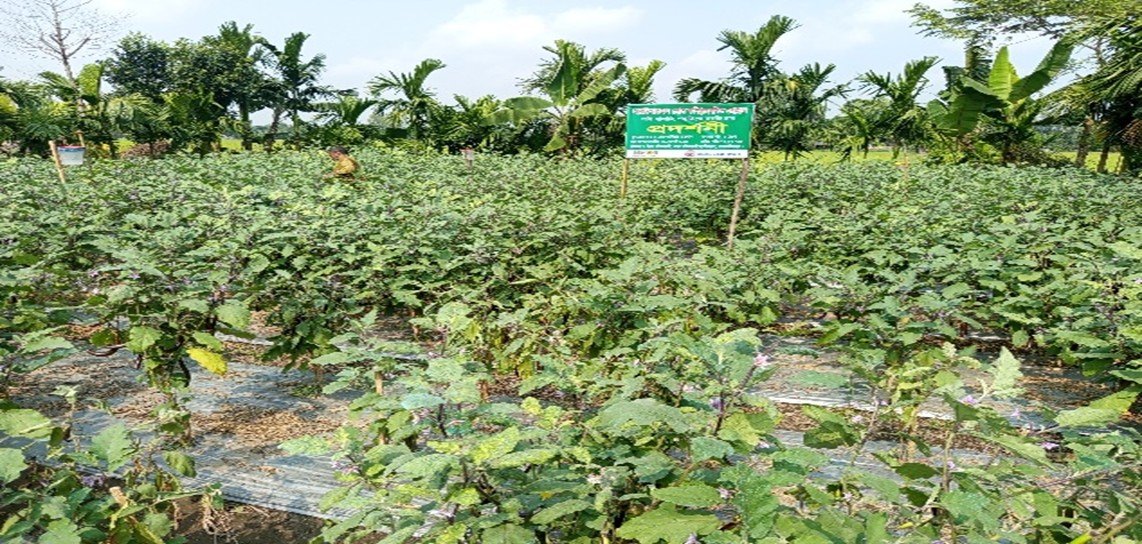
Photo: Brinjal cultivation using eco-friendly IPM and mulching techniques for sustainable production
He said, “Earlier I used to apply only chemical pesticides frequently in my field. Now, with pheromone traps and biopesticides, I can effectively manage yellow mosaic virus and insect pests while keeping soil, water, and the environment safer, while still achieving higher yields.”
Today, he is seen as a role model in his community, demonstrating that environmentally friendly farming can be both profitable and sustainable. His success highlights how IPM and biopesticides can improve productivity, ensure safer food, protect ecosystems, and build resilience to climate change. On this World Environment Day, his story reminds us that protecting the environment and improving farmers’ livelihoods can go hand in hand.
Pallab Goswami, Research Associate, RDRS Bangladesh and Md. Mamunur Rashid, Consultant, CIMMYT-Bangladesh