
When Women Lead the Fields: The Transformative Power of Women Farmers
“She wakes up before sunrise. She feeds the cattle, tends the crops, manages the harvest, runs the household and still, when asked, she say…‘I am not a farmer.’”
This quiet erasure is at the heart of what this Women’s Day is about.
Across the world, women have always been part of agriculture, sowing seeds, harvesting crops, tending livestock, and feeding families. Yet according to the Food and Agriculture Organization, women’s share in agrifood systems globally dropped from 46% in 2005 to 36% in 2019. In Bangladesh alone, women account for 58% of the agriculture workforce (LFS, 2022) and still, their work remains largely unrecognized, undervalued and unpaid.
The wage gap, the invisible labour, the decisions made for them rather than by them are not just social issues. They are economic ones and changing them is not charity. It is smart economics.
The Gap Between Work and Recognition
Women in farming households across Bangladesh, India, and Nepal mostly do not own land, have limited access to credit and are frequently excluded from agricultural training and technology programmes. Men dominate those spaces, even in households where women do most of the work.
But here is what the data and the stories both tell us. When women are given access, everything changes. Not just for them, but for their families, their communities and their local economies. The question is not whether women can lead. It is what happens when we finally let them.

Photo 1: Women manage most of the post-harvest work themselves in farming households. Uttor berubondo village, Joldhaka, Rupantar plot-site.
When Knowledge Becomes Power
Meet Sudha Rani Mohanto. Through Rupantar’s training programme, she did not just learn about mustard cultivation. She became an inspiration and a master in her village.
“We used to cultivate mustard, but not very often previously. Other people in the area too didn’t cultivate mustard much either. With the help of the project, we have started to do it on a regular basis every year and other farmers are also following our steps.”
She manages irrigation. She diversifies crops when others will not. She has opened a shop to create a family income stream. She does everything with vision, not just for duty.
Sudha’s story is not exceptional. It is what happens when women are empowered with sustainable skills, skills that cannot be taken away when a project ends or funding dries up.
From Homemaker to Entrepreneur
Forty-six women in Bnagladesh were trained in improved native chicken rearing under Rupantar with zero financial support. Only knowledge and skill-oriented training were provided by linking them to local livestock services.
Two women leaders even learned to administer vaccines themselves and began earning income by providing that service to their community. The rest expanded their flocks, improved household nutrition and started making their own financial decisions.
Parvin Begum puts it simply, “Last month I wasn’t able to manage tuition fee for my daughters. So, I sold chickens and paid the 400 BDT tuition. My two girls are studying, one in class eight and another in class six. I bought two rims of paper for them from income of selling chickens. This is a big change.” A guidebook, school fees, rims of paper for her daughters, bought with money she earned through skills she owns. That is what economic dignity looks like.
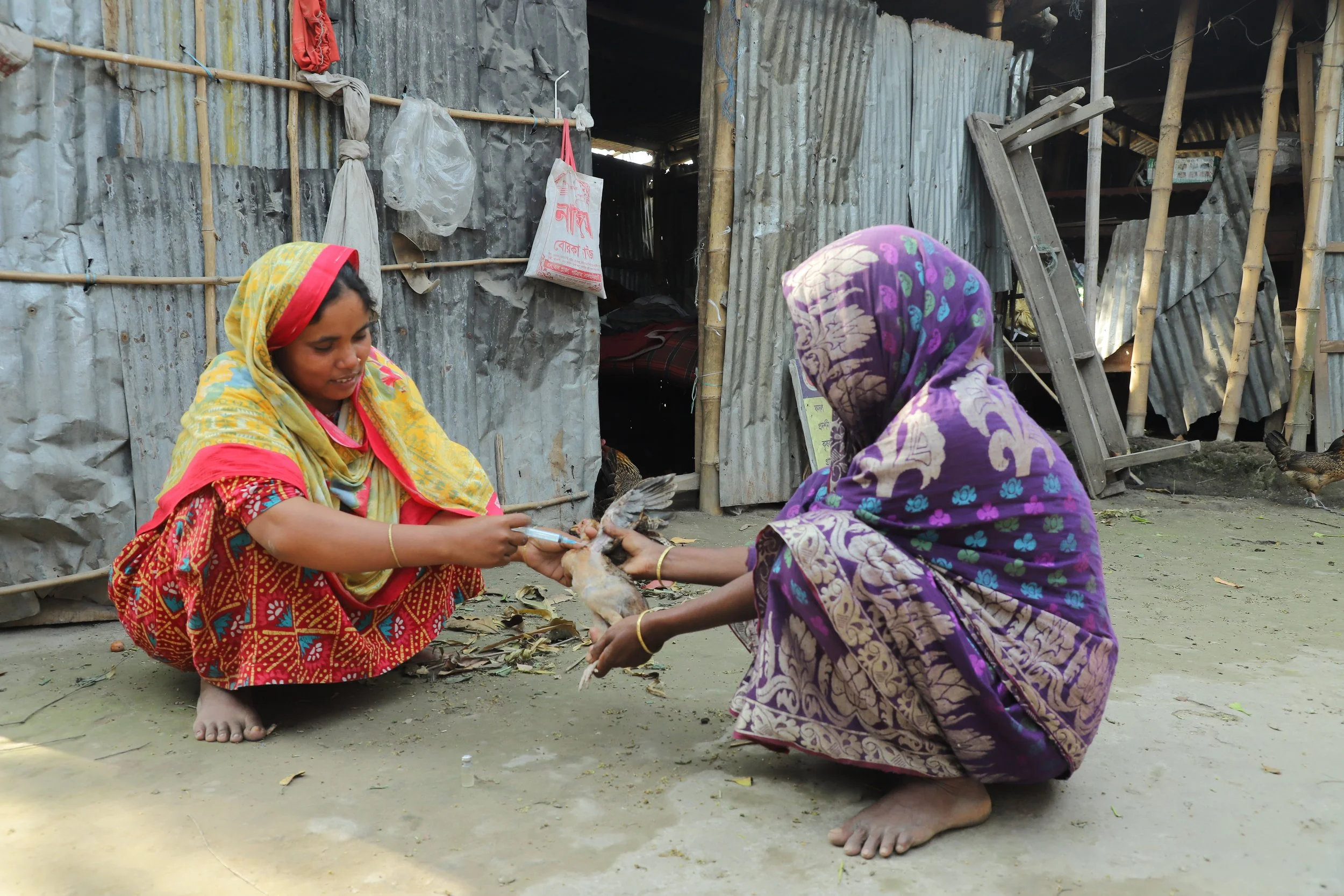
Photo 2: Women with vaccination skills are now earning income and strengthening community networks. Poschim Sarodubi village, Hatibandha, Rupantar non-plot site.
The Shift that Matters Most
The most powerful transformation is not measured in income or crop yield alone. It is the moment a woman stops saying ‘I just do my duty’ and starts saying ‘I am a producer. I am a leader.’
When women join training programmes and peer groups, their self-perception begins to shift. They start to see their own expertise. They make decisions for themselves, for their groups, and for their communities. The change may be quiet, but it is real, and it is lasting. The projects with end dates cannot sustain this. What sustains it is capacity development that lives within the person, knowledge, skills, and confidence that no project closure can erase.
This Women’s Day
This Women’s Day, we celebrate the women who wake before sunrise, and work long after sunset, women who are on the journey of recognizing their own worth, of changing how they see themselves, of claiming the dignity and respect they have always deserved.
Recognizing women farmers is not a call for charity. It is a call for smart economics, sustainable development and social justice. The fields are already being led by women. It is time the world looked up and saw them.
Written by:
Anupama Islam Nisho, Assistant Research Associate, CIMMYT
Dr Bhuvana Narayana Rao, Consultant (Senior Social Researcher), CIMMYT