
Voices From The Field: Reflections From 2025
We often think of time as linear, a calendar reset for a “newer self” and new beginnings. We speak of “leaving a year behind” as if time were a straight road with clear milestones. In farmlands, however, time cycles through sowing, waiting, and harvest; Poila Boishakh in West Bengal and Bangladesh, and Pahilo Baishakh in Nepal, mark renewal through harvest, monsoon anticipation, gratitude, and prayers for fertile land.
Rupantar (रुपान्तर/ রূপান্তর), a collaborative initiative working with smallholder farmers in eastern Nepal, India and northern Bangladesh, takes its name from a word that means transformation. In practice, this unfolds as continuity through gradual transitions in cultivation, risk management, and future visions. Rupantar unfolds slowly, through decisions taken between seasons, new practices tried alongside old ones, and small shifts in routine that do not depart entirely from the past. What emerges is not a sense of closure, but of continuity negotiated through possible solutions under uneven conditions.
Rather than drawing conclusions, this moment offers a chance to listen closely to how change has been lived in the fields. Farmers described how decisions to try something new emerged gradually, from exposure, expectations, and a sense of having little to lose. One farmer recalled, “The idea of practicing multi-layer farming came to our minds mainly due to the exposure visit that was organized for us.” Another said, “I expected to get benefits if I get involved, that’s why I joined.” For some, the decision was simpler: “I thought, whatever happens—it’s barren anyway. If it grows, fine. If not, so be it. So, I planted.” Trying something new was not a leap but a measured step, shaped by what people had seen, what they expected, and the risks they were already living with.
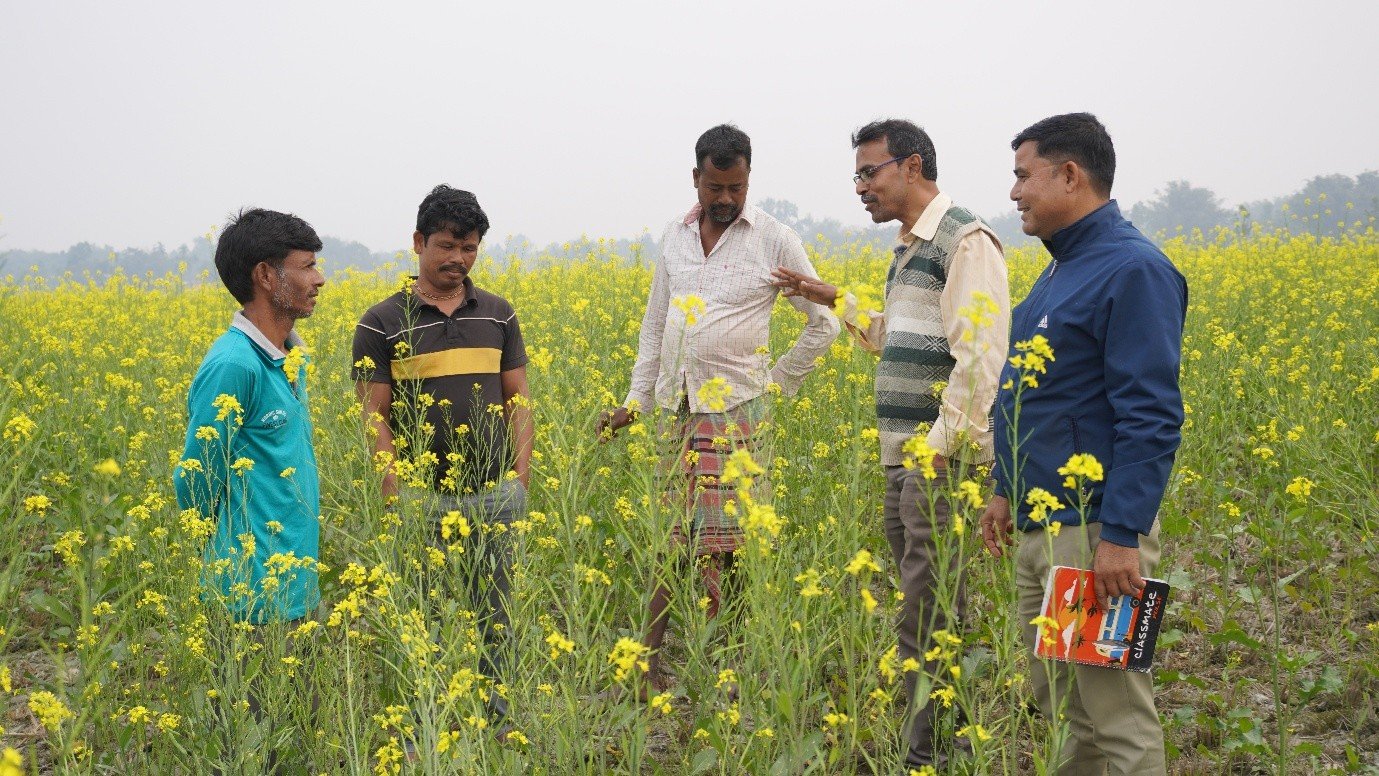
Photo: Plot level farmers interacting with experts from UBKV
Trying was only the beginning. Through Rupantar’s activities, farmers experimented with new combinations of crops and livestock, and some began to see small but meaningful gains. As one respondent put it, “We are earning more now than before. A few days ago, I sold chicken worth 2,000 BDT (Bangladeshi Taka). We also consume native chicken more often now.” Yet gains brought new demands, as a woman goat farmer in India described: “Yes, I must wake up at 4 am in the morning and work throughout the day, there is no time to rest during the day.” Others spoke about how hard it was to put advice into practice alongside daily responsibilities: “The problem is that doing all the things they suggested in training is difficult for me.” Change appears not as a clear before-and-after, but a series of adjustments negotiated daily within the constraints of household time, labour, and capacity.
Even as these gains emerged, challenges persisted and sometimes deepened. Farmers already managing limited resources also had to face shocks. “Flowers were there on the plant, but they fell. It didn’t stop, so I faced loss,” recalled a chili farmer. Another dairy farmer said, “Payment delays cause hardship. The feed we buy is costly. Sometimes I had to stop buying feed because the prices rose too much.” Changing climate added another layer of difficulty: “No, this year it was worse. Earlier, when it rained, it would last 2–4 days. But now, there’s either too little or too much. It’s hard to plough or plant.”
Despite these challenges, farmers continued to adjust, experiment, and imagine different futures for themselves and their families.
“I want to build a farm.”
“I will keep cultivating my land till I am alive.”
“Definitely, I will cultivate more maize next year.”
“I have plans to go on rearing these chickens. I am grateful to Allah that I am being able to do something.”
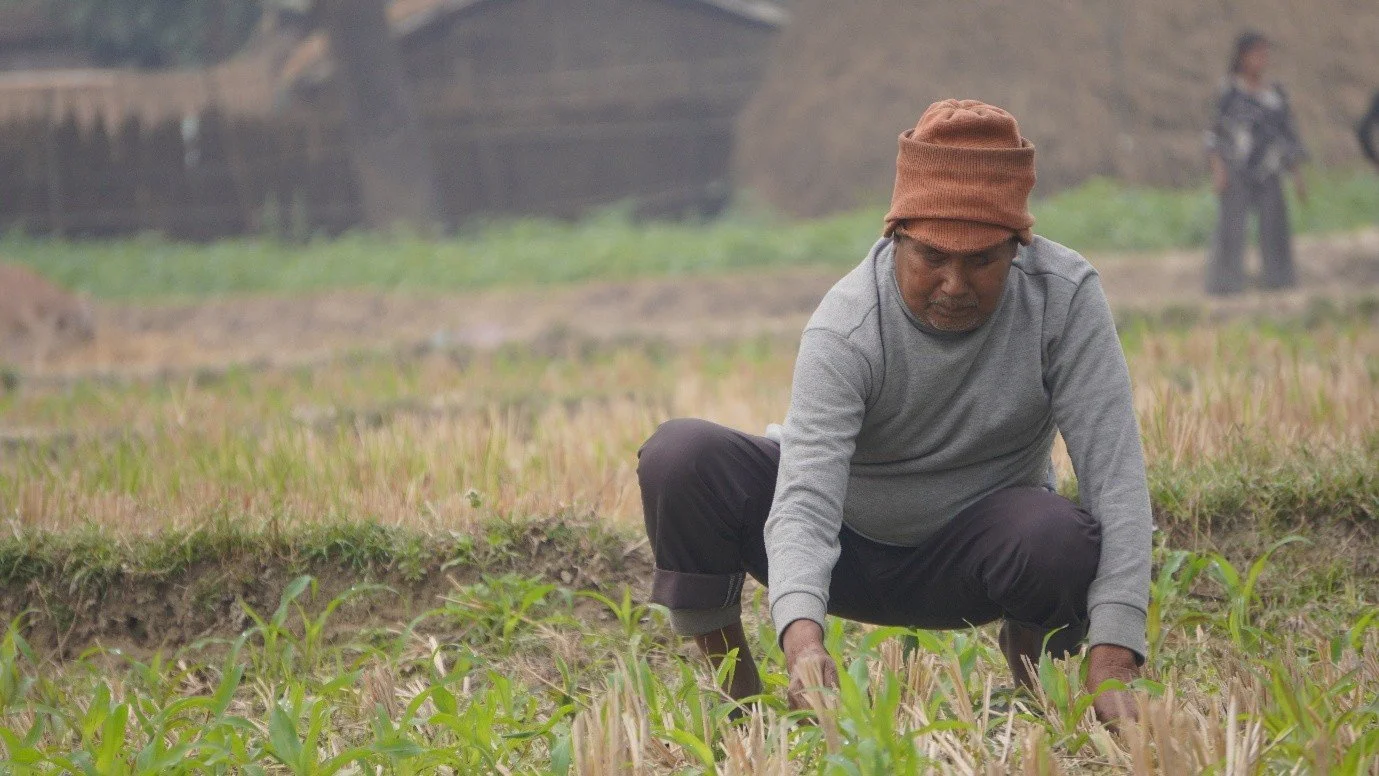
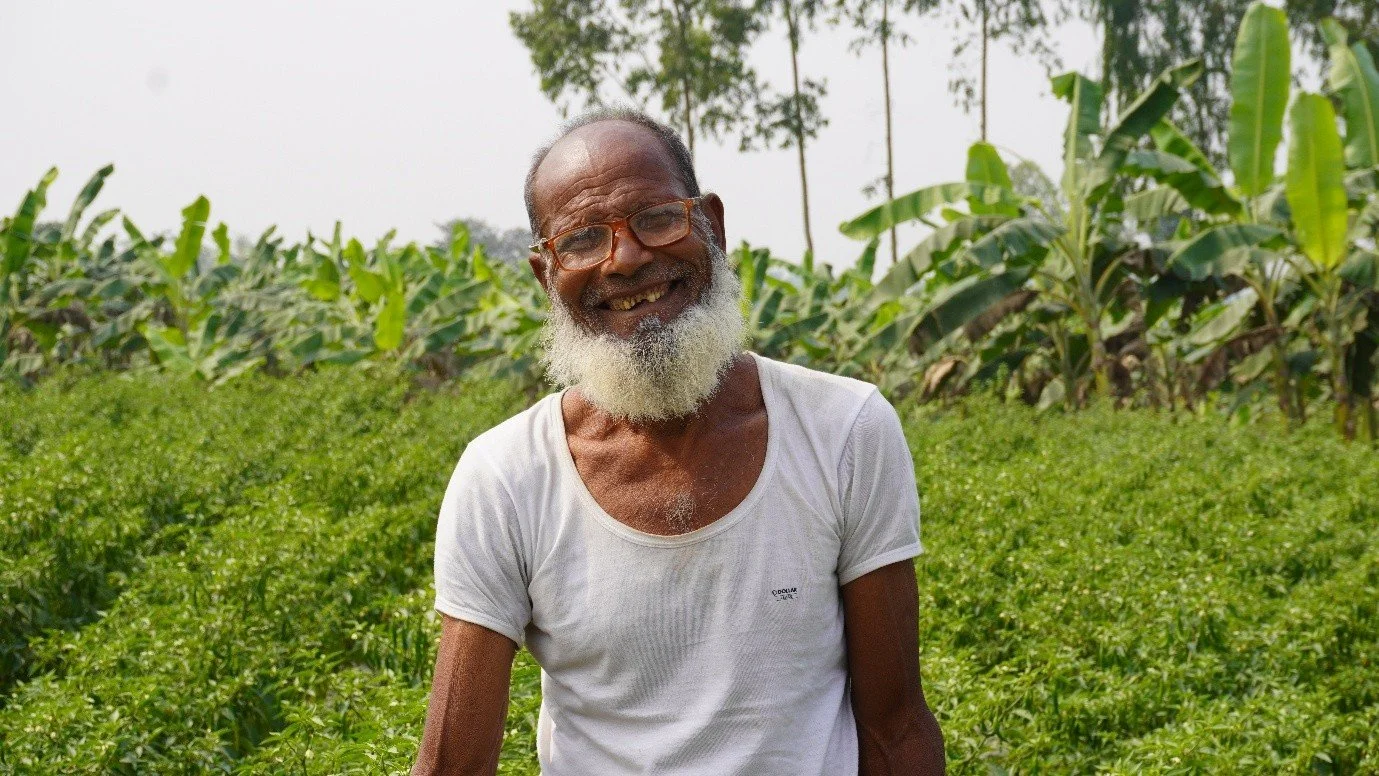
Photos: Chottu Sada taking care of maize field in Nepal (L) and Sirajuddina Miya smiling after a good chili harvest (R)
Through such everyday efforts, Rupantar advances quietly, season by season, choice by choice, shaping life in the fields in ways both small and significant. Unlike the linear “reset” of a calendar year, change here is gradual and often incremental, but over time these small steps can move farming households towards deeper transformation. Rather than relying on a single big intervention, Rupantar works with bundles of practices and supports that help farmers flexibly adjust their systems to shifting risks and opportunities. Rupantar supports these quiet adaptations that sustain livelihoods over time.
Seen together, these experiences point to a few recurring patterns:
· Farmers adopted practices like multi-layer farming and mulching via exposure visits, peer success, and subsidies (saplings, mulch)
· Gains: reduced labor/water use, fewer pests/weeds, better nutrition, and income.
· Challenges include shortages of seeds, tools, and fertilizers, plus climate shocks, pests, and unstable markets.
· Farmers aspire to grow more with better irrigation, shared equipment, and timely support from groups.
This blog draws on semi-structured interviews, coded in NVivo as part of the Rupantar project's monitoring activities. Excerpts have been lightly polished for readability and grammatical clarity while preserving the respondents' original meaning and voice.