
Rebuilding the Foundations of Life: Pathways of Soil Restoration and Climate-Resilient Farming in Eastern Gangetic Plains of India
“The nation that destroys its soil destroys itself.” — Franklin D. Roosevelt
Where Earth Breathes Beneath Us
Soil is more than a growth medium, it is the living skin of the earth, a dynamic biogeochemical reactor that drives nutrient cycling, water regulation, carbon sequestration and ecosystem resilience (Lal, 2020).This thin layer, formed over millennia, hosts nearly a quarter of the planet’s biodiversity, mediates 95 percent of global food production, and is central to climate mitigation through its capacity to store three times more carbon than the atmosphere. On World Soil Day, this reminder becomes even more profound as we reflect on the silent services of soil and the growing urgency to restore, revive, and regenerate it. In the eastern Gangetic plains, one of the most fertile yet fragile agro-ecological regions, ACIAR’s RUPANTAR initiative in Cooch Behar provides compelling evidence of how a scientific community-based approach can reshape soil health trajectories. By integrating conservation agriculture principles i.e., minimal soil disturbance, residue retention and diversified crop rotations with hydrological and agronomic innovations, Rupantar demonstrates scalable models for climate resilient intensification.
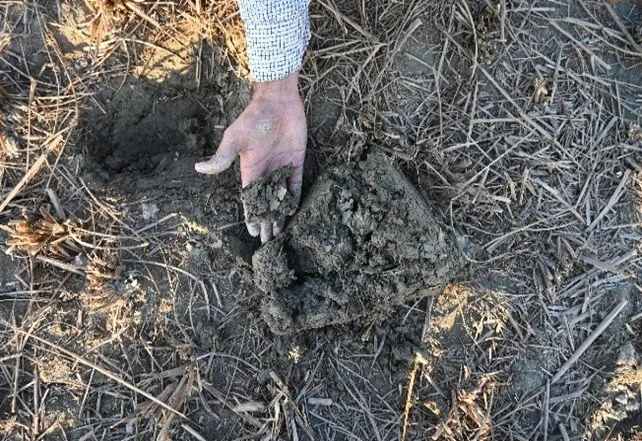
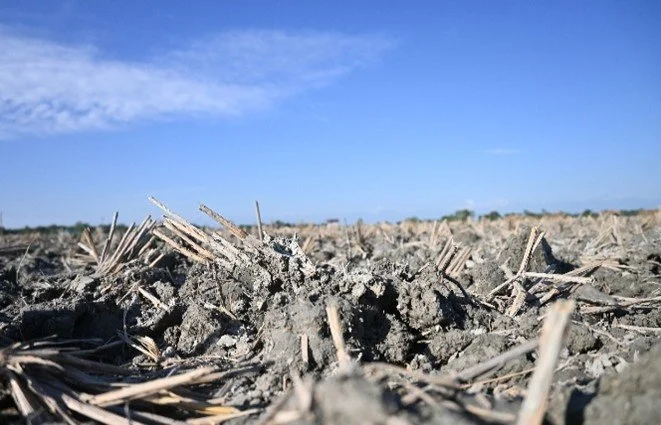
Photos 1: Soil moisture condition in plot area before sowing of ZT
From Fields of Pause to Fields of Promise
In the villages of Rui Danga and Bhogmara, where post-rice fallows were traditionally left uncultivated due to narrow planting windows, soil moisture challenges, and labour constraints, Rupantar introduced a paradigm shift by promoting Zero-Tillage (ZT) mustard, harnessing residual soil moisture while minimizing soil disturbance. This approach aligns with the global conservation agriculture principles of minimum soil disturbance, soil cover maintenance, and diversified rotations (Kassam et al., 2019). In these sites, ZT mustard not only reduced turnaround time after paddy but also enhanced soil structural stability by decreasing tillage-induced compaction and preserving soil aggregates (Jat et al., 2020). Incorporation of Trichoderma-based seed treatments further stimulated the soil microbiome, enhancing rhizosphere competitiveness against pathogens and contributing to long-term biological amelioration (Hermosa et al., 2012). Over successive seasons, accumulated crop residues transform the rice–mustard system into a diversified, conservation-oriented cropping sequence, reflecting global trends in sustainable intensification and advancing the UN Sustainable Development Goals SDGs 2, 13, and 15 (UNFAO, 2015).
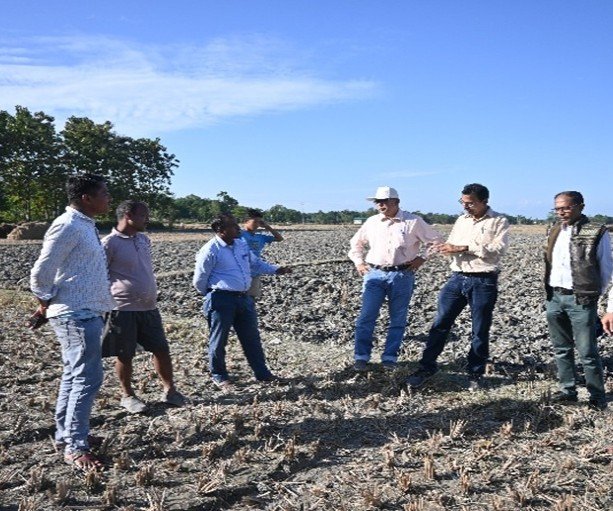
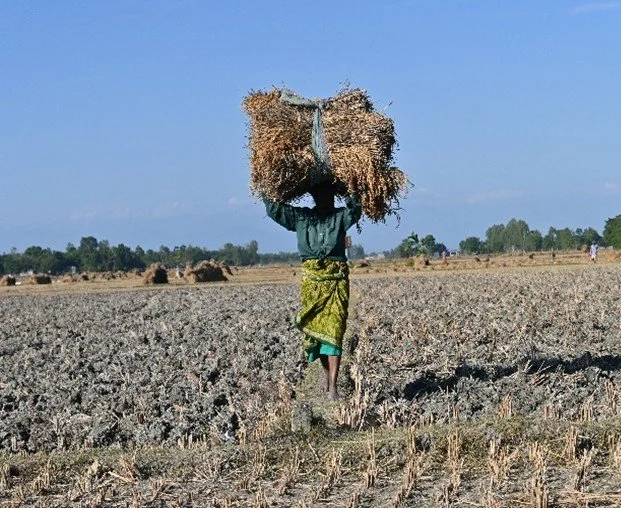
Photos 2: Field visit before ZT mustard sowing (L) and post paddy field condition (R)
Whispering Life into Silent Sands
In the irrigation-scarce landscapes of Gaddarpar, farmers contend with sandy soils, low water-holding capacity, and frequent moisture stress. Chilli dominates the cropping system, alongside cucumber, brinjal, and tobacco, however, production is constrained by rapid soil desiccation, nutrient leaching, and poor root-zone stability. Rupantar addressed these limitations through an integrated soil-water management package combining polyethylene mulching, straw mulching, and raised-bed planting. These interventions moderated soil temperature, enhanced infiltration, reduced soil erosion, and minimized nutrient losses. The introduction of bioconsortia (Trichoderma+ Pseudomonas) through seedling dipping catalysed a positive shift in microbial diversity and reduced wilt incidence. Mulching also decreased irrigation frequency and improving water productivity by integrating traditional knowledge with advanced soil-health practices. These interventions established a resilient production platform in a previously fragile agroecosystem. Through maintaining soil cover, minimizing disturbance, enhancing microbial activity, and diversifying cropping systems, Rupantar is promoting an ecologically grounded, sustainable agricultural model.
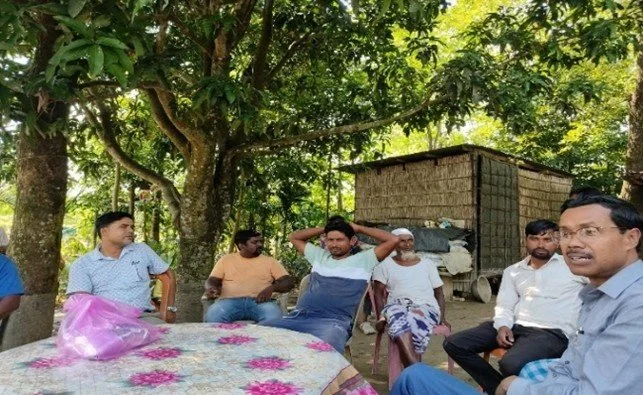
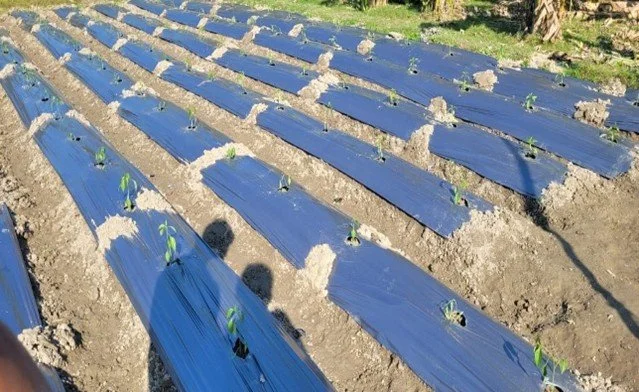
Photos 3: Demonstration on plant and soil management (Irrigation Constraints) (L) and cultivation of chilli using poly mulch (R)
Sowing Tomorrows Today
Rupantar aligns with global soil-restoration frameworks including the UNFAO Global Soil Partnership, the International Year of Soil, the 4 per 1000 Initiative, and ACIAR’s climate-resilient agriculture agenda. Its core interventions viz. residue retention, moisture–tillage optimization, and bio-based mulching enhance soil organic matter protection, reduce evaporative and nutrient losses, and improve system resilience. Zero-tillage/reduced tillage mustard has expanded to nearly 1,000 hectares across Cooch Behar, Jalpaiguri, Alipurduar, and neighbouring Assam districts, confirming strong agronomic fit. The West Bengal Department of Agriculture has reinforced adoption by scaling ZT mustard in Alipurduar and integrating beekeeping and solar-powered irrigation, strengthening soil–water–energy linkages. Next steps include wider use of biodegradable mulches, microbial inoculants (Trichoderma, Pseudomonas), and soil carbon monitoring aligned with global MRV standards. On World Soil Day, Rupantar demonstrates how targeted, evidence-based practices can restore soil function and build climate resilience across the eastern Gangetic plains.
References
Hermosa, R., Viterbo, A., Chet, I., & Monte, E. (2012). Plant-beneficial effects of Trichoderma and of its genes. Microbiology, 158(1), 17–25. https://doi.org/10.1099/mic.0.052274-0
Jat, M. L., Datta, A., Choudhary, M., Yadvinder-Singh, & Sidhu, H. S. (2020). Conservation agriculture for sustainable intensification in South Asia: Issues, innovations, and institutional aspects. Advances in Agronomy, 159, 1–76. https://doi.org/10.1016/bs.agron.2019.08.001
Kassam, A., Friedrich, T., Derpsch, R., & Kienzle, J. (2019). Overview of the worldwide spread of conservation agriculture. Field Crops Research, 231, 3–13. https://doi.org/10.1016/j.fcr.2019.01.010
Lal, R. (2020). Managing soils for negative feedback to climate change and positive impact on food and nutritional security. Soil Science and Plant Nutrition, 66(1), 1–9. https://doi.org/10.1080/00380768.2020.1718548
United Nations Food and Agriculture Organization (UNFAO). (2015). Status of the World’s Soil Resources (SWSR) – Main Report. Rome: FAO Intergovernmental Technical Panel on Soils.