
Transforming Koshi Province: Driving Nepal’s Crop Diversification and Resilient Livelihoods
Agriculture is the heartbeat of Nepal, spanning from the heights of the Himalayas to the fertile plains. Traditionally, Nepalese farming was built on mixed cropping systems—a diverse range of crops shaped by local needs and climates. However, recent decades have seen a steady shift towards crop intensification, especially in cereals like rice, driven by market forces and comparative advantage[1]. This trend, while boosting certain outputs, has slowed the pace of diversification just as urgent climate and livelihood pressures demand more resilient farming systems.
Why Diversification Matters
Crop diversification is recognized worldwide as a pathway to sustainable agriculture, higher incomes, and climate resilience. Nepal’s government has enacted a range of acts, rules, and policies to encourage diversification, capturing these ambitions in key strategies like the Agriculture Development Strategy (ADS) 2015–2035. Yet, translating policy into widespread impact has proven challenging.
We reviewed 18 national policies related to crop diversification spanning from 1990 to 2022. This was supplemented by an analysis of 15 periodic plans of Nepal. The policy review revealed that although the crop diversification has been increasingly mainstreamed in policies, but implementation remains hindered by a series of challenges. Policy coherence across federal, provincial and local government is missing. Also, lack of coordination among three tiers of government creates confusion at the implementation level[2]. Some of the implementation programs are duplicated within the tiers, while some others are still left untouched.
The Rupantar project reviewed around 23 initiatives led by both government of Nepal and the different development partners. The study found that even though the coverage of the program has expanded, the results are limited due to weak inter-governmental coordination, limited provincial capacity and fragmented approach. A similar situation was found in development partner led initiatives, which also face risks of donor dependency and scattered efforts.
Challenges on the Road Ahead
Despite early wins, the journey to large-scale diversification in Nepal faces several persistent obstacles:
Land Fragmentation: Increasing subdivision of farmland makes diversified, larger-scale production more difficult.
Infrastructure Gaps: Low investment in roads, electricity, and irrigation slows adoption of new crops and systems.
Policy Coherence: Shifts to federal governance have outpaced agricultural policy reform, creating gaps in accountability between local and national government.
Irrigation Access: Nepal’s untapped potential in solar irrigation holds promise but remains underutilized, leaving many reliant on rain-fed cropping alone[3].
Moving Forward: Actions for Impact
To truly unlock the potential of agricultural diversification, the following priorities emerge:
Tailored Policy Support: Policies must match the real, on-the-ground needs of smallholders, including incentives for adopting high-value crops and diverse systems.
Extension & Education: Scalable models require training, demonstrations, and ongoing support from agricultural extension workers and local leaders.
Market Access & Innovation: Ensuring fair prices and improved market connections, especially in dairy, are key to making diversification financially viable.
Integrated Approaches: Greater coordination among communities, private sector, government, and NGOs will build a resilient and inclusive agricultural future for Koshi and beyond.
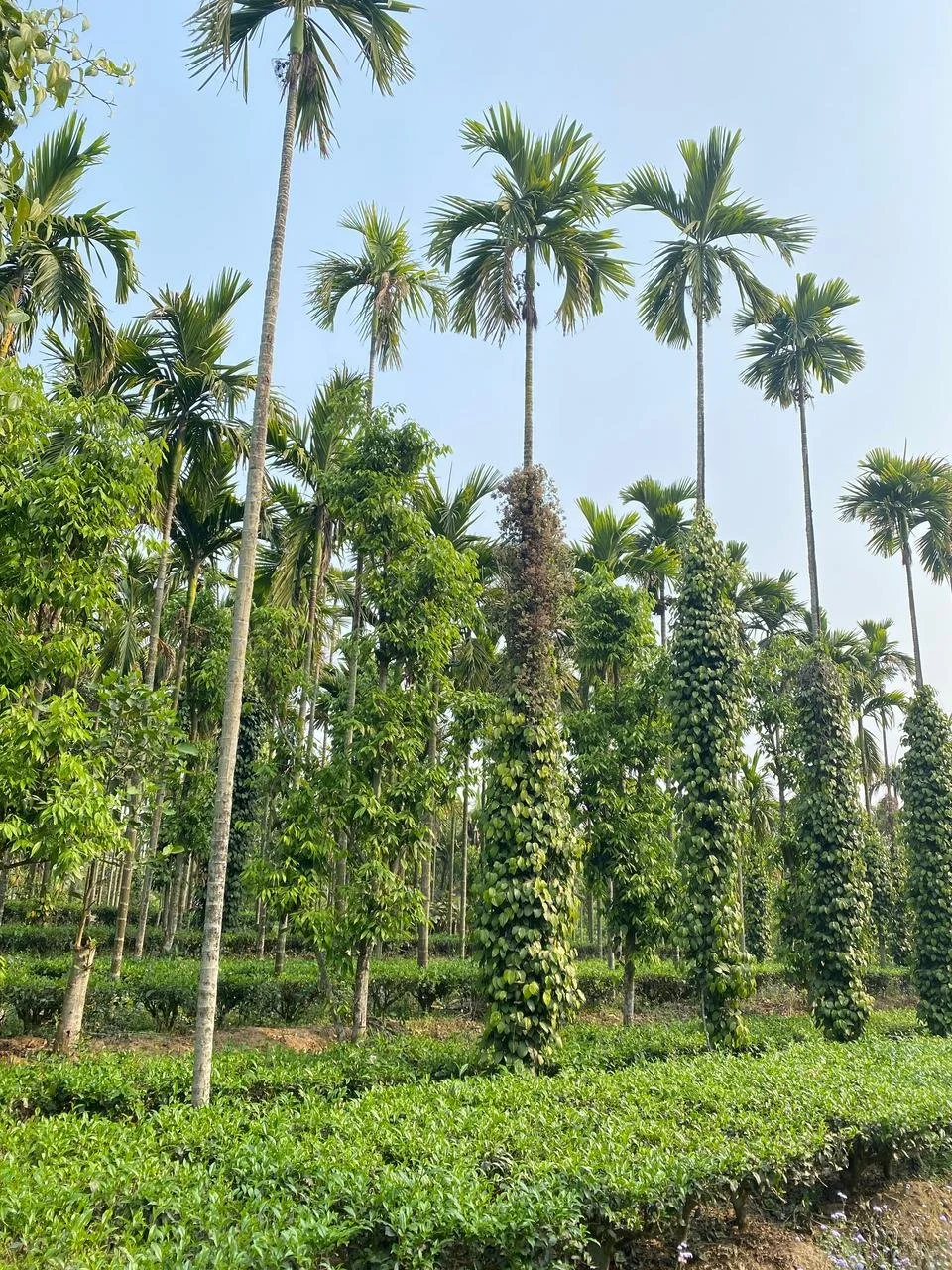
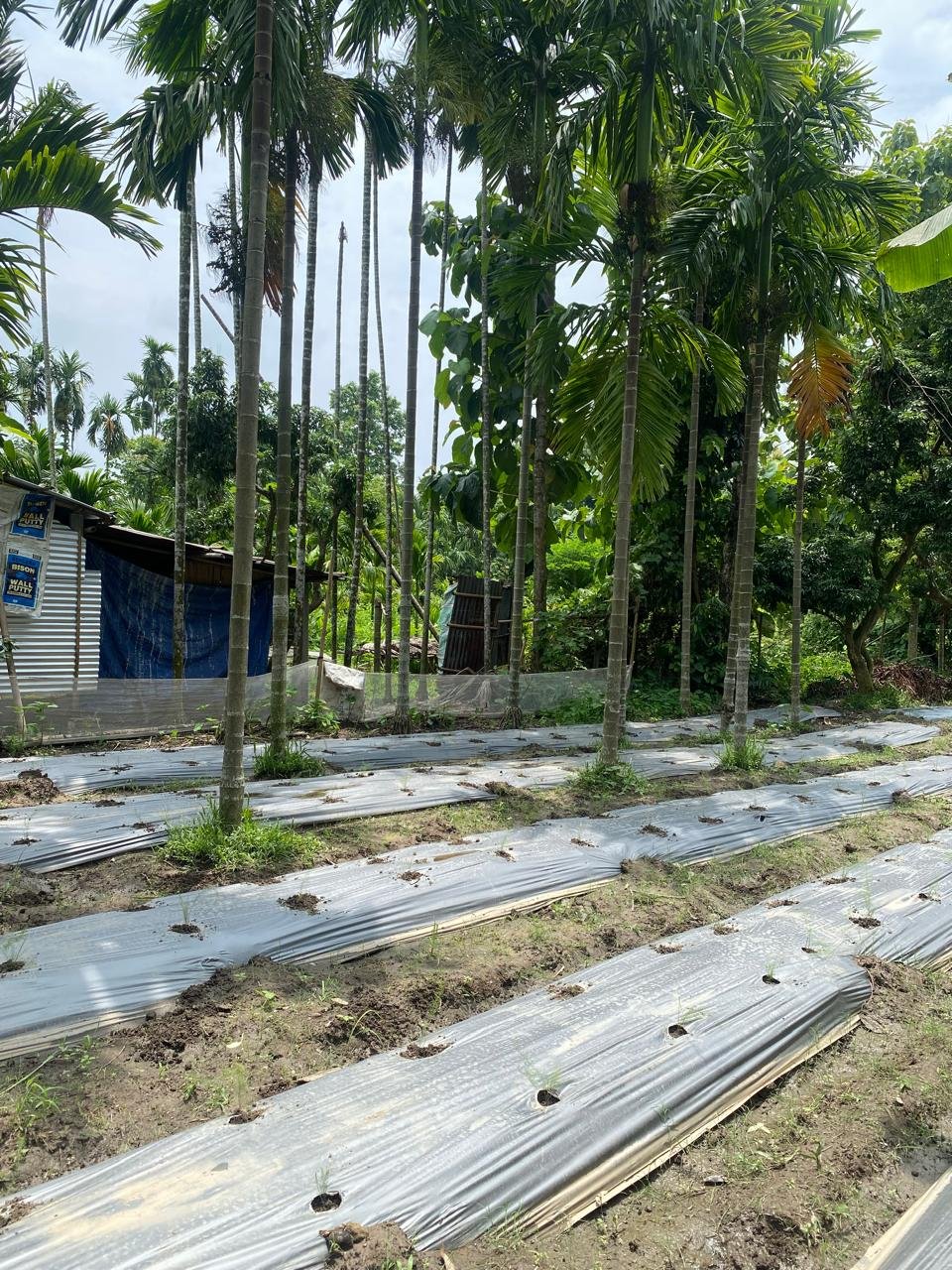
Photo (L): A glimpse of existing multi-layer farming practices (PC: Samer Khan); Photo (R): Preparation for asparagus cultivation in a betel nut field in Jhapa (PC: Anamika Kandel).
Through the Rupantar project, we are promoting agricultural diversification using a participatory approach with smallholder farmers in the Eastern Gangetic Plains. The project recognizes that lasting transformation requires appropriate technologies, effective scaling mechanisms and supportive policy. Our policy analysis focuses on assessing existing scaling interventions to identify key lessons that make them effective and sustainable. By engaging with policies and programs to inform their design and implementation, Rupantar aims to ensure stronger institutional support for diversification. These insights will provide evidence-based guidelines for changemakers. Together, through innovation such as multi-layer farming, zero tillage maize cultivation, and improved dairy practices, CIMMYT and its partners are helping build a more resilient, diversified, and sustainable agricultural future for Koshi province.
Reference
[1] Pingali, P. L., & Rosegrant, M. W. (1995). Agricultural commercialization and diversification: processes and policies. Food policy, 20(3), 171-185.
[2]Poor coordination in three levels of govt affecting development. The Rising Nepal. Retrieved from https://risingnepaldaily.com/news/34916?utm_source
[3] IWMI. (2022). Solar Irrigation for Agricultural Resilience (SoLAR), https://solar.iwmi.org/count ry-updates/nepal/