
The Missing Generation in Nepali Agriculture: How Youth Migration is Reshaping Farming
Agriculture has long been the backbone of rural livelihoods in Nepal, shaping not just the economy but also family traditions, social values, and community identity. But today, this age‑old profession is struggling to grow with time. Once, whole families worked in the fields; now feels empty as young people leave, leaving mostly older parents and grandparents to cultivate the land alone. The past one year shows that around 0.84 million youths from Nepal left the country for foreign employment which is 2.88% of Nepal’s total population. In this context a farmer from Morang district recently shared a personal story that reflects how quickly things are shifting and how far younger generations are drifting from farming in Nepal.
“I had three sons,” he said. “One has gone to China, and the other two to Gulf countries. One son is still working there, but the other returned home after he could not find a good job there. Now, he is again preparing to leave this time, to Croatia or Cyprus, like so many Nepali youths these days.”
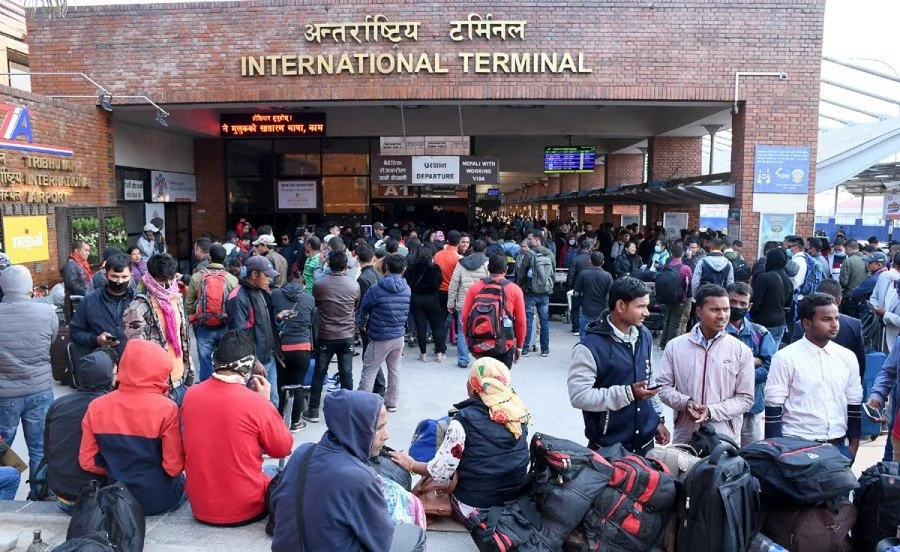
Despite owning nearly 3 bighas of agricultural land, the family’s engagement in farming has continuously declined. There was a time when all three sons worked beside their father in the fields. One son studied while helping part-time in the field, while the other two were fully engaged in agricultural activities. Their goal was to increase income through increased production. But over time, the challenges grew heavier than the harvest.
The farmer explained that inadequate mechanization made agricultural work exhausting and slow. Almost every task from ploughing to harvesting required manual labor. As more young people from the community migrated abroad, finding daily wage laborers became increasingly difficult. Even when labor was available, the cost was high. Though yields were acceptable, the overall income remained too small to meet the growing needs and ambitions of the family.
“In some crops,” he admitted, “we continue farming only because it’s a family tradition. The cost of cultivation is often higher than the income we get from the harvest. Farmers face limited access to essential inputs such as fertilizers and pesticides, and the supply of subsidized fertilizer in Nepal remains far below actual demand, forcing us to rely on expensive informal markets. Access to appropriate seeds is another persistent challenge, pushing farmers to depend on the Indian cross‑border market for high‑yielding varieties. Rising groundwater levels add further tension; in our area deep tubewell installations no longer function properly, discouraging farmers from investing.”
His words reflect a sentiment shared by thousands of Nepali farmers. Agriculture, once a source of pride, stability and livelihood, now struggles to compete with the economic expectations of modern youth. The farmer recalled how, in his own adulthood, he worked alongside his father and even cultivated others’ land under the ‘ADHYA’ sharecropping system. “At that time,” he said, “cultivating more land was a matter of honor. We never focused much on income.”
But today’s youth see things differently. Today’s youth dream of financial security, stable employment, and a higher standard of living. Their dreams are difficult to achieve through small‑scale, low‑mechanized farming. For many, migration appears to be the only viable path to a better future.
This story from a farmer of Morang is not just one family’s experience. It represents many Nepalese farmers across different regions. With two of his sons abroad, the farmer shared how the entire responsibility of farming now rests on him and his wife, both elderly and finding the work increasingly burdensome. They often discuss giving their land for sharecropping, even though this has become difficult as fewer people are willing to take land, choosing instead to farm only during the rice season and leave fields fallow the rest of the year. In this situation, efforts like the RUPANTAR project are advocating become timely alternatives. Its promotion of zero‑tillage (ZT) maize has offered farmers a practical way to keep their land productive even in winter, without the use of heavy labor or high costs. The reduced labor requirement and lower expenses of ZT maize have become a promising option for families like theirs, helping ensure that farmland remains in use and that elderly farmers can continue cultivating.