
Farming Through Uncertainty: A Smallholder’s Experience in Rupantar
On a foggy evening in December, Pandav Mandal heard news circulating in his village about a new approach to growing maize, one that involved no tillage at all. Sowing seeds on unplowed land sounded rather absurd to him at first. Yet, he began to think about the costs he might save if the technique actually worked.
“Maybe the money I spend renting rotavators could go toward my daughter’s school fees, or perhaps be used for the cows, he thought. But doubts lingered. Would it really work? And how would the machine perform in such a wet field?
A few days later, the Jeevan Bikas Samaj (JBS) team arrived in the village to sensitize the community about the zero-till practice as an activity under Rupantar. Mr. Tika Kumar Bisunke, who is leading the plot-diversification pathway implementation in Morang, briefed farmers on the success of the technology in nearby villages during the previous year. He spoke not only about the economic savings but also about the ecological benefits, from conserving soil moisture to improving organic carbon retention. What intrigued Pandav even more was the offer. Under Rupantar, the ZT drill service would be provided free of cost if farmers used their own maize seeds and fertilizers.
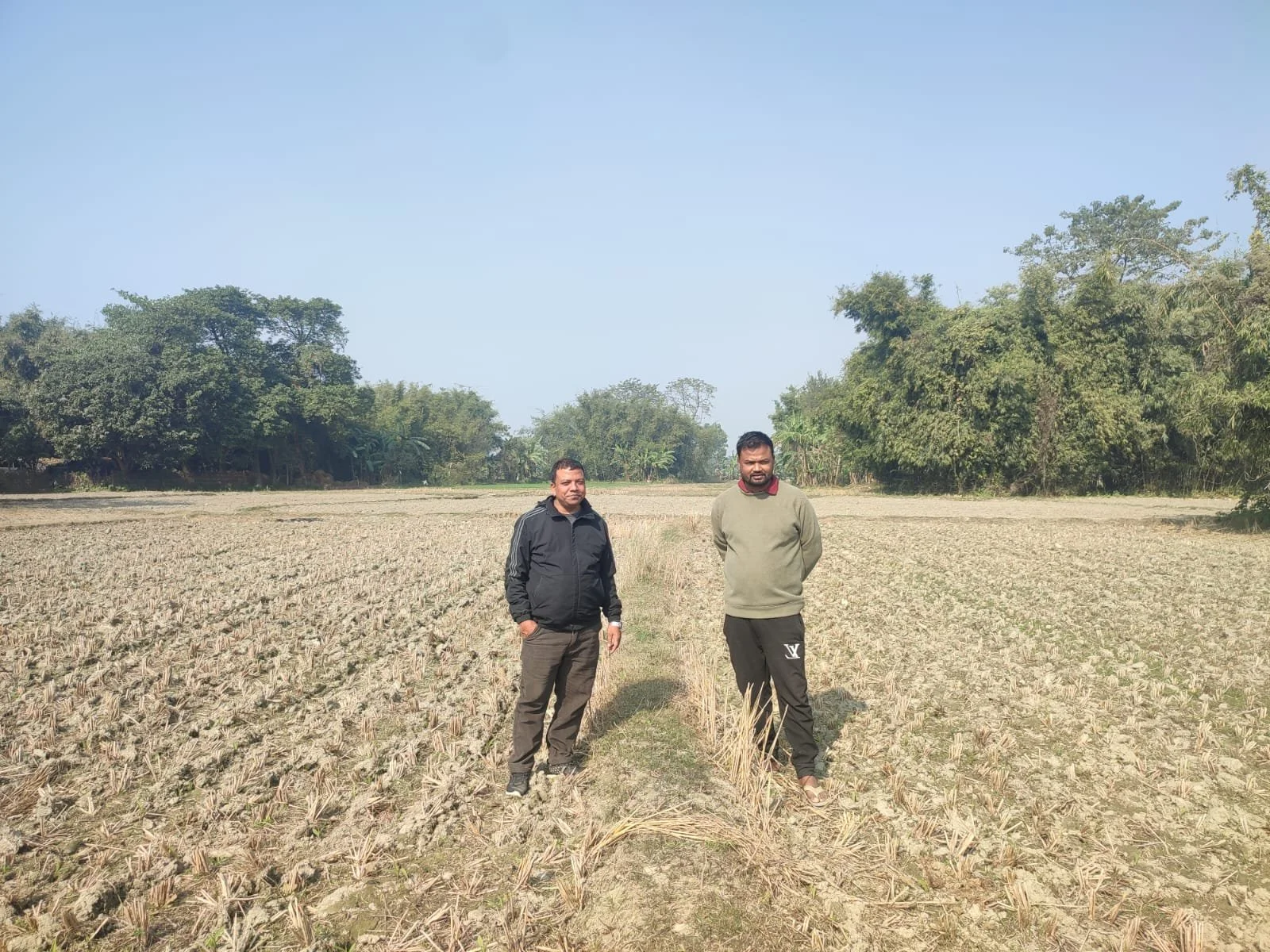
Photo: Pandav Mandal (left) on his two types of non-tilled maize fields, with Tika Kumar Bisunke from JBS (credit: Saurya Karmacharya)
That was enough to convince him. Pandav decided to try zero-tillage maize cultivation using the ZT seed drill, starting with three katthas of land. However, erratic off-season rainfall had left the soil wet and muddy. His suspicion was turning true. As the machine moved across the field, clumps of sticky soil began accumulating on the drill’s outlet valves. Watching this, Pandav grew uneasy. He was no longer sure whether the seeds were being placed properly into the soil.
But instead of abandoning the practice altogether, Pandav paused and carefully weighed the risk. In consultation with Mr. Tika, he adapted a different approach for the remaining seven katthas. He continued using the machine to apply fertilizer and draw rows but placed the maize seeds manually along the furrows. The process required extra effort, but it gave him reassurance and confidence. That night, he slept well, knowing he had not only managed the risk but also taken his first cautious step toward adopting zero-tillage farming.
Today, he is very grateful towards JBS and Rupantar for providing him an opportunity to practice conservation agriculture-based farming.
Such adaptive measures could be pivotal in helping other smallholders respond to the growing aberrations in rainfall patterns, while also promoting sustainable intensification.