
Annual Review and Planning Meeting held virtually
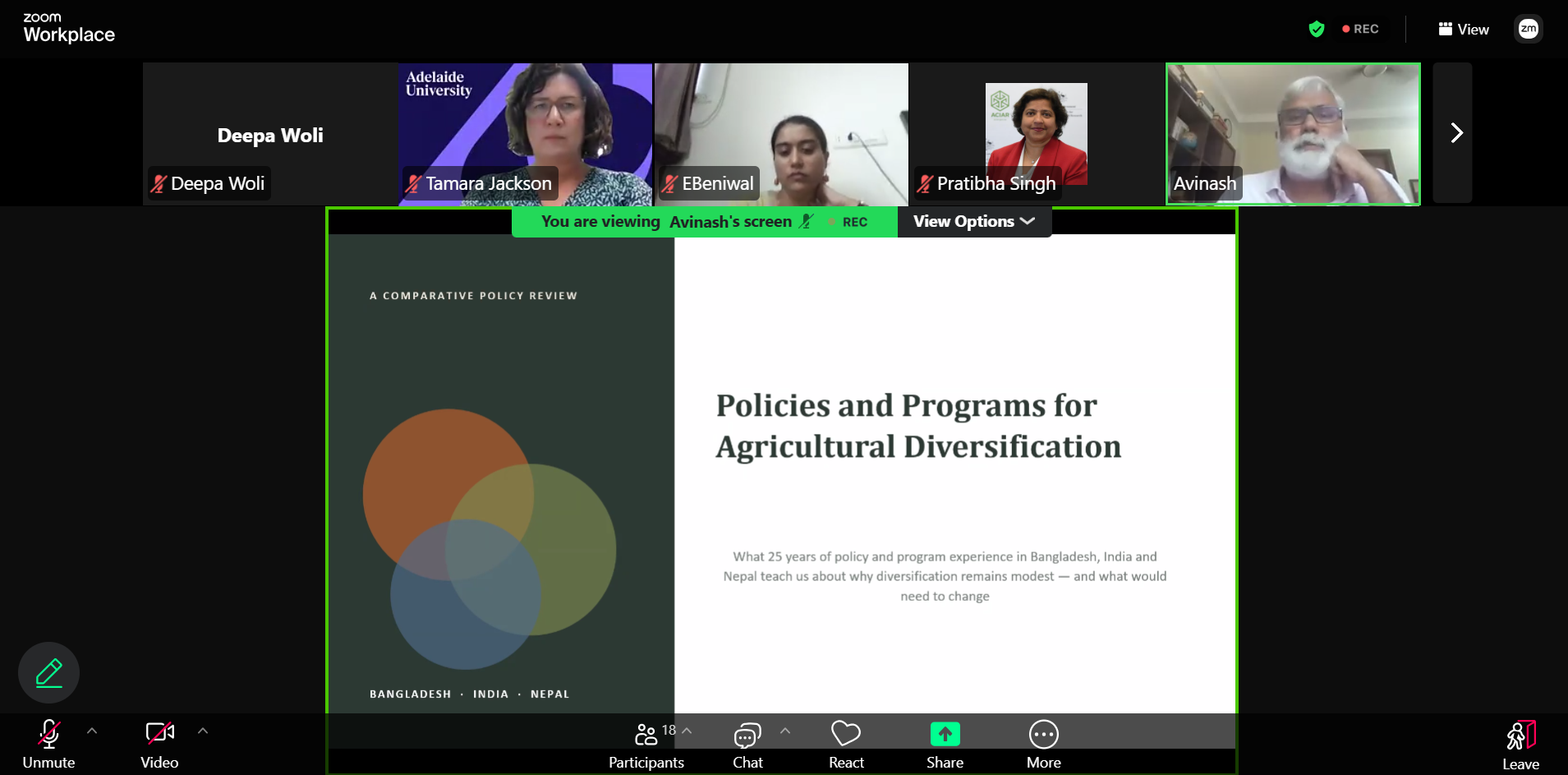
Rupantar conducted its four-day Annual Review and Planning Meeting virtually, with half-day sessions being held each day. The meeting was led by Dr. Tamara Jackson, Project Lead, and brought together the project team and partners from Nepal, India, and Bangladesh. Dr. Pratibha Singh, Regional Manager for South Asia at ACIAR, participated in and contributed to discussions throughout the three-day meeting.
In the opening remarks, Dr. Singh congratulated the team for their work and highlighted the project’s approach of working closely with partners and farmers. She encouraged the team to reflect on the approaches used so far and strengthen discussions on policy, communication, and future planning.
The meeting reviewed progress and learning from the 2025–26 implementation period and prioritization for the one-year extension, with sessions covering pathway implementation, monitoring change, gender and inclusion, transformation, scaling, policy, and planning.
The first half day opened with an overview of the project, including highlights from 2025–26 and updates on implementation. Partners from Nepal, India, and Bangladesh presented progress and challenges in pathway implementation, while CIMMYT shared an overview of monitoring approaches and preliminary Standard Seasonal Monitoring (SSM) results. The sessions provided an opportunity to discuss country-level findings, challenges, and priorities for the next phase. The day concluded with reflections.
Similarly, second day focused on monitoring change and collaboration, with discussions on emerging themes from the pathways and SSM. The team examined themes emerging across locations, including trade-offs and synergies, and explored whether common themes across different pathways could be examined in greater detail.
The second session focused on alternative indicators, gender, and inclusion. Dr. Ravi Nandi, Agricultural Economist and Innovation System Scientist from CIMMYT highlighted evidence on whether national diet indicators capture rural realities in the Eastern Gangetic Plains (EGP), followed by an update on progress and gaps in gender and inclusion.
Likewise, day three focused on emerging themes for scaling and transformation, including scaling pathways, spillover and scaling dynamics, stakeholder analysis, and scaling strategies. Discussions also covered farmers’ preferences for formal and informal information sources, stakeholder network analysis, and approaches to assessing transformation.
The team further discussed policy settings for agricultural diversification, including comparative analysis of policies in Bangladesh, India, and Nepal and approaches to policy analysis in South Asia.
The last day of the meeting focused on discussions and planning for communication requirements, updates on student completions and capacity development, followed by location-specific and overarching workplans. The day concluded with a final review of project achievements and future plans, providing partners with an opportunity to consolidate progress and agree on priorities for the next stage of the project.
